Why Your Mudroom Matters More Than You Think
If you've ever found a damp coat draped over your kitchen chair or muddy wellies sitting by the living room door, you know the problem. Ireland's weather doesn't do subtle. One moment it's drizzle, the next it's downpour, and then somehow the sun's back out again. Your family needs a dedicated space to deal with all of it — a proper mudroom where wet gear can dry properly without dampening the rest of your home.
A well-designed mudroom isn't just about keeping things tidy. It's about creating a genuine buffer zone between the outdoors and your living spaces. When coats, boots, and umbrellas have a dedicated home right at the entry point, they actually get used properly instead of migrating through your house.

The Essential Elements of a Working Mudroom
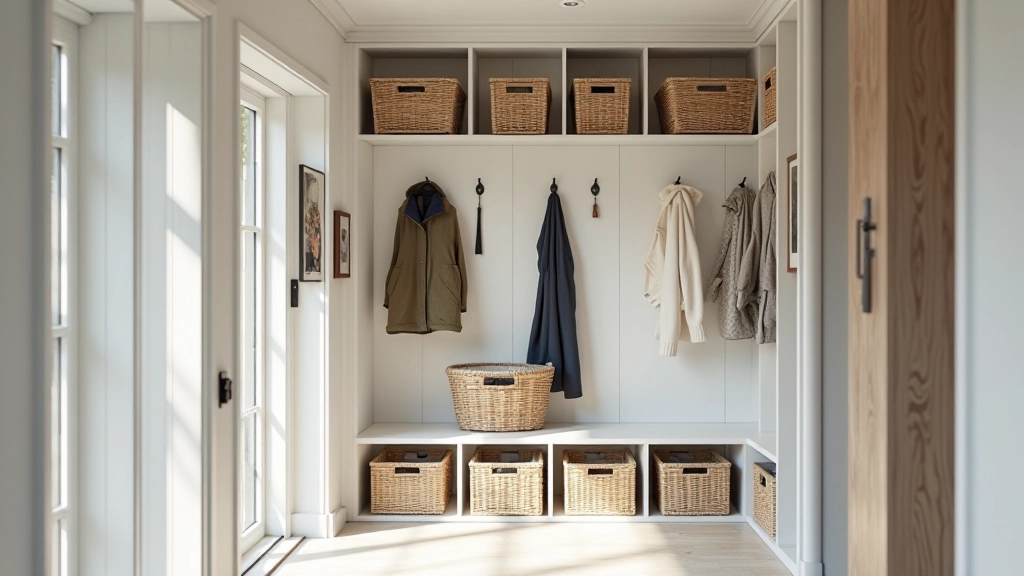
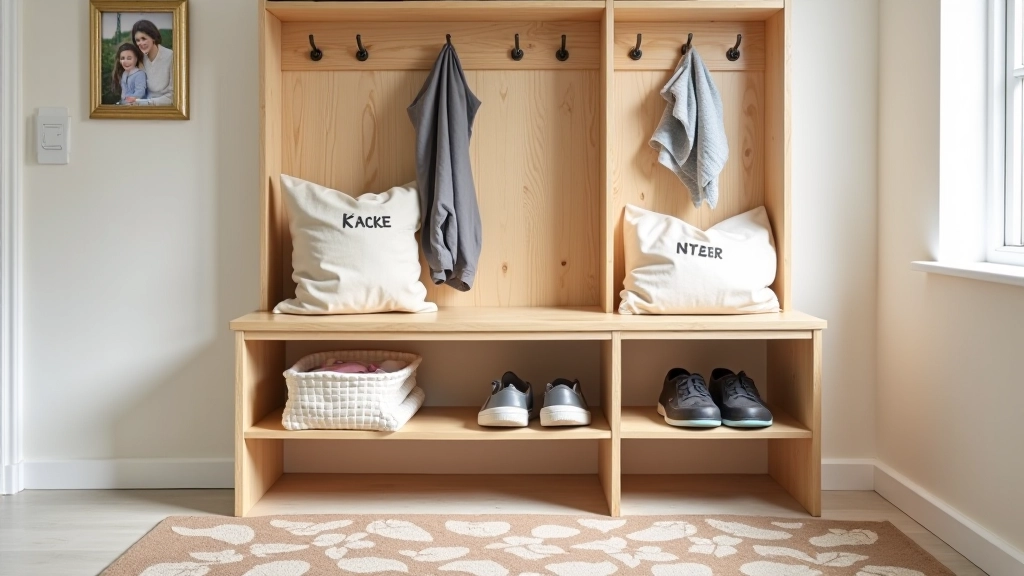
Let's start with the basics. You'll want at least three key features: hooks for hanging wet coats, a boot tray or mat system that actually contains moisture, and closed storage for shoes and gear. That's not fancy — it's functional. Most Irish hallways are compact, so you're working with limited space. The trick is using vertical space aggressively.
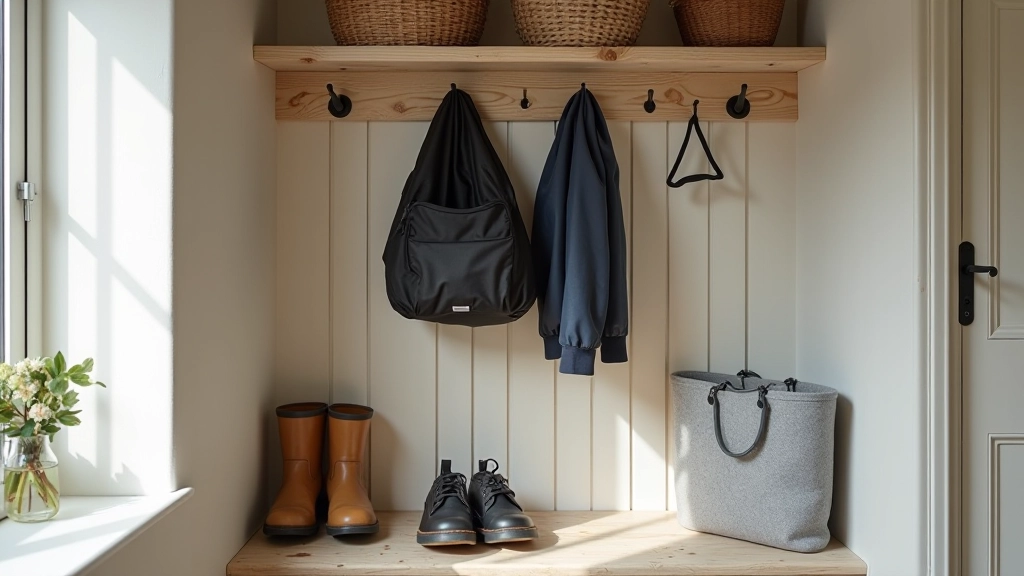
Hooks should be positioned at different heights. Taller ones (around 180cm) work for adults, while lower hooks (about 120cm) let kids hang their own coats without frustration. We're talking about practical independence here — when a 7-year-old can actually reach their own hook, they're more likely to use it instead of dropping a wet jacket on the nearest chair.
The boot tray is surprisingly important. It catches water, mud, and debris before it spreads across your floors. Get one that's at least 60cm wide and 90cm long if you can fit it. Rubber or polypropylene trays work best — they won't rot or stain like some materials do.
Quick Tip: The Drying Challenge
Wet coats and boots need air circulation to dry properly. If you're crammed them into a closed cupboard, they'll develop mildew. Consider open shelving or ventilated cubbies for gear that's currently drying. Closed storage is fine for items that are already dry.
Building Your Storage Strategy
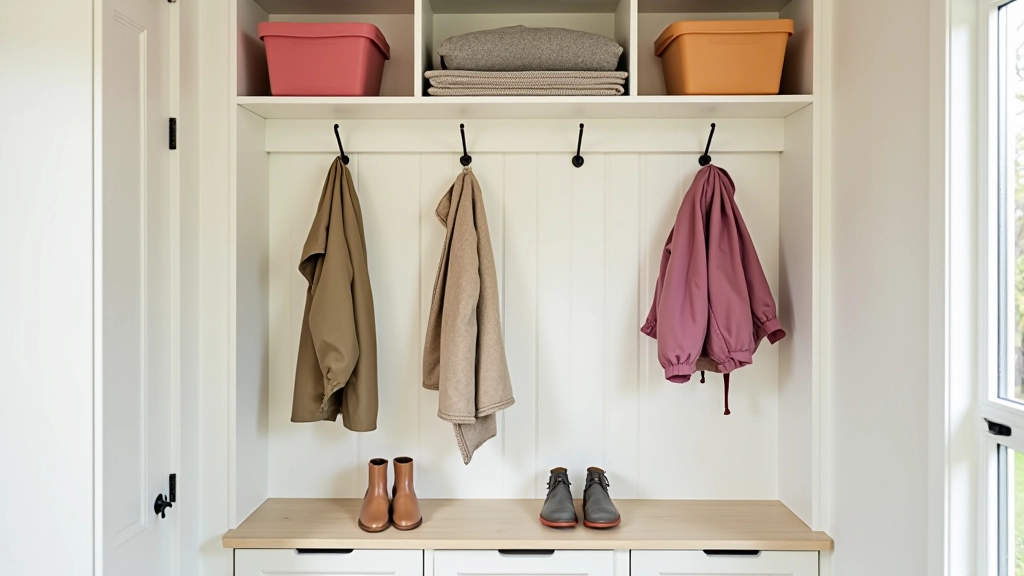
Think of your mudroom in layers. The top layer — hooks and rails — is for active items you use daily. The middle layer is for shoes and footwear in use. The bottom layer handles off-season gear, spare umbrellas, and emergency supplies. This isn't rigid, but it does reflect how often you actually grab things.
For shoe storage specifically, cubbies work brilliantly. You're not stacking shoes in a pile where you can only access the top pair. Each person gets their own cubby space — maybe 30cm wide, 25cm deep, enough for two pairs of everyday shoes. This takes the friction out of getting ready. No one's hunting for their boots while you're already late for school.
Labeling matters more than you'd think. Not fancy labels — just clear, durable ones that say "Emma's wellies" or "Dad's work boots." You're creating a system that everyone in the family can use without asking where things go. After about three weeks of consistent use, the system becomes automatic.
Materials That Actually Stand Up to Irish Weather
You're fighting moisture constantly. Cheap materials won't cut it. Solid wood cubbies, treated or naturally moisture-resistant, are worth the investment. Pine can work if it's sealed properly. Metal hooks are better than plastic for wet coats — they won't bend or crack under repeated use. Stainless steel is ideal but more expensive; standard galvanized hooks are a solid middle ground.
Flooring matters too. Ceramic tiles, sealed concrete, or quality vinyl are your best bets. Carpet? Don't even think about it. You're setting up a space designed to be hosed down occasionally. Mop-friendly flooring is non-negotiable. A proper grout seal on tiles keeps moisture from creeping underneath.
For wall finishes, semi-gloss or satin paint handles moisture better than flat finishes. It's easier to wipe down, and it'll resist mildew better. If you're worried about impact damage (kids throwing bags around), consider a dado rail or wainscoting up to about 120cm height. Real boards or moisture-resistant MDF both work fine.
The best mudroom system is the one you'll actually use. It doesn't need to be Instagram-worthy — it needs to be functional enough that wet boots go in the right place, not on your kitchen tiles.
Making It Work for Your Whole Family
The system breaks down if it's too complicated. You're not organizing a museum; you're creating a space your family will actually use when they're rushing out the door. That means everything needs to be intuitive. If someone has to think about where their boots go, they won't use the system.
Kids especially need obvious places for their stuff. A cubby with their name on it, at their height, is infinitely more effective than explaining "your section is the middle shelf." They'll use it because they can see it and reach it. Same with hooks — lower hooks for kids, higher ones for adults, and everyone knows which is theirs.
Maintenance is part of the design. Build in a space where you can actually clean and dry things. A simple wooden bench or shelf where you can set boots to dry, open to air circulation, makes a real difference. Some people add a low-level fan or open the mudroom window on wet days to help moisture escape.
Final Thoughts: Start Simple, Improve Over Time
You don't need to build the perfect mudroom in one go. Start with the essentials: hooks, a boot tray, and basic shoe storage. Use the system for a few weeks. You'll quickly figure out what's missing or what you'd do differently. Then you can adjust — add more hooks, reorganize shelving, or upgrade to better materials where it matters most.
The goal is simple: keep your home drier, your family more organized, and your mornings less chaotic. A working mudroom does all three. It's one of those spaces where good design and practical function align perfectly. When your kids can grab their coats and boots without your help, and everything actually dries instead of creating damp patches on your furniture, you'll understand why this matters.
Disclaimer
This article provides general guidance on mudroom design and organisation. Individual circumstances, home layouts, and building regulations vary. For structural modifications or electrical work, consult a qualified tradesperson or architect. Always check local building codes and planning requirements before making permanent changes to your home. This content is informational only and not professional construction or design advice.